Two Years, Every Month a Headline: AI From Sora to GPT-5 and Nano Banana
Faisal Adnan · 05 Nov 2026
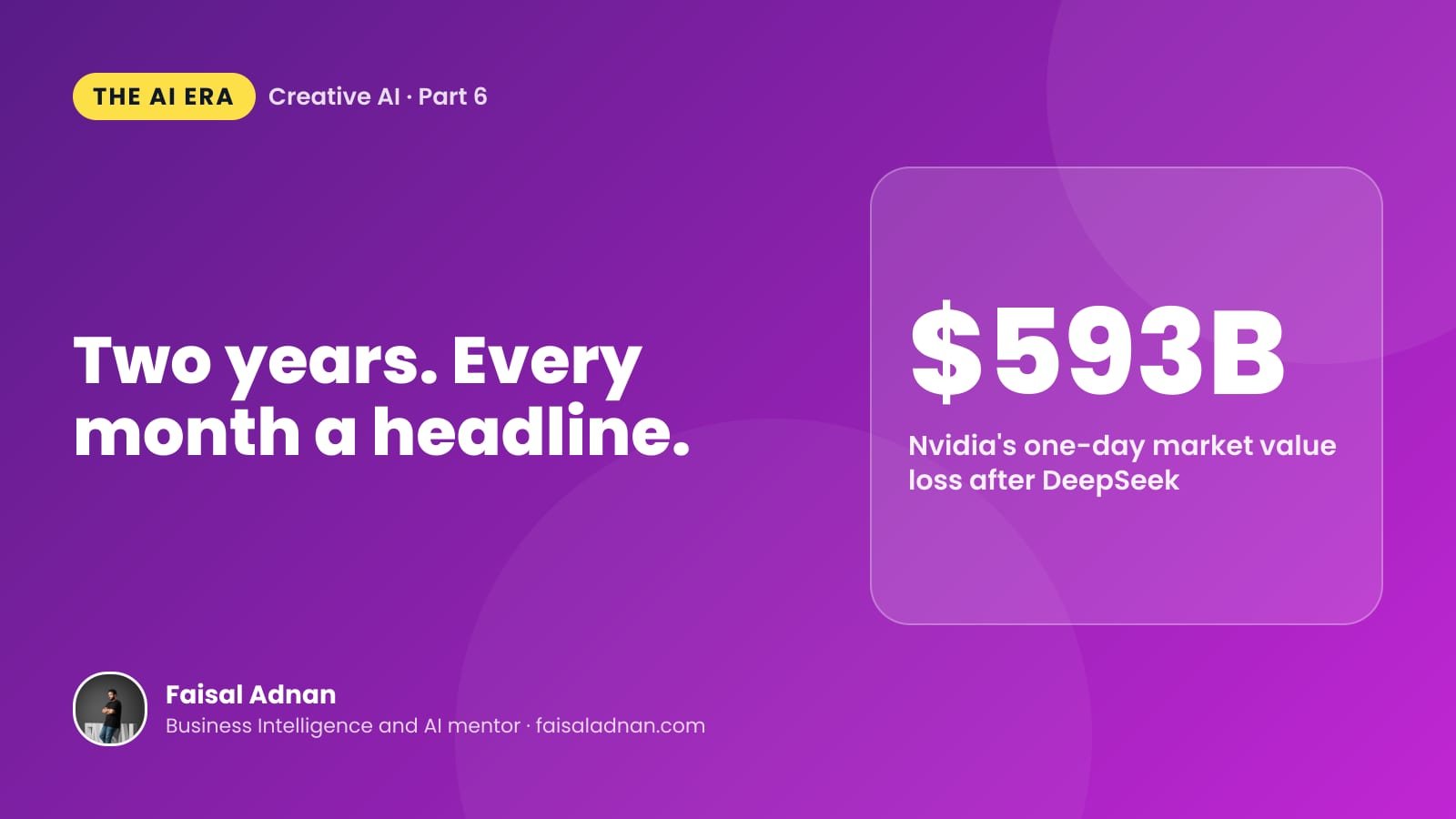
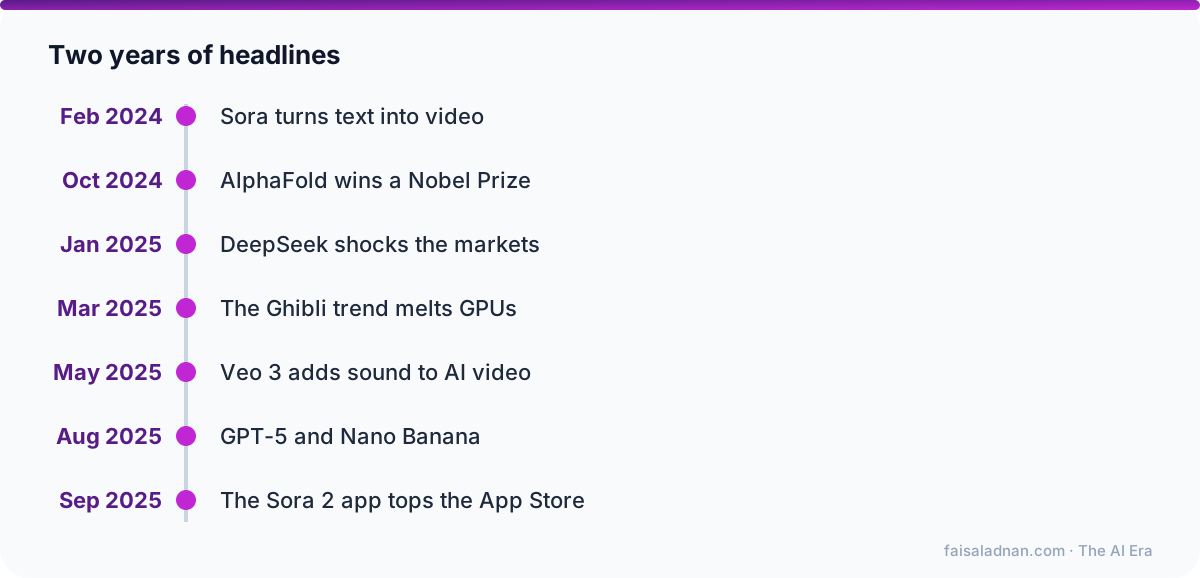
If you tried to keep up with AI news during 2024 and 2025, you probably felt dizzy. Something big seemed to happen every month. Here is a quick tour of the headlines, followed by what the pace itself teaches us.
Key takeaways
- The pace is the story: tools you learn today may be replaced within a year, so learn principles and keep practising.
- Competition is global: a low-cost model from one lab shook a whole market in a day.
- Every viral moment has a cost, whether compute, copyright questions or deepfakes. Notice who pays.
February 2024: Sora
OpenAI showed Sora, a model that turns text into video up to a minute long. The famous demo prompt described a stylish woman walking down a Tokyo street. Axios covered the announcement. The clips were far smoother than anything seen before, though at that point only a small group could use the tool.
October 2024: an AI Nobel
Demis Hassabis and John Jumper of Google DeepMind were co-awarded the 2024 Nobel Prize in Chemistry for AlphaFold, which predicts the 3D structure of proteins from their amino acid sequences. The system has predicted around 200 million structures, which is work that used to take a researcher a whole PhD for a single protein. This is a good example of AI doing real science rather than just writing text.
January 2025: the DeepSeek shock
A low-cost Chinese model from DeepSeek matched OpenAI's o1 on many tests. The market reacted hard: according to Reuters, as republished by the Kathmandu Post, Nvidia posted a record market-value loss of around $593 billion in a single day. Investors worried that a cheap model could threaten the leaders and the huge spending behind them. The episode connects directly to the question in Is It a Bubble?
March 2025: the Ghibli trend
Everyone turned their selfies into Studio Ghibli style art. Sam Altman posted that "our GPUs are melting" and OpenAI introduced temporary rate limits. Fortune also noted the copyright questions the trend raised: when a model imitates a famous style, who owns the result and who should be paid?
May 2025: Veo 3
Google's Veo 3 generated video together with sound: dialogue, effects and music. TechCrunch described it as a model that can create audio to go along with its clips. For AI video, the silent era was over.
August 2025: GPT-5
OpenAI released GPT-5, which was pitched as a PhD-level expert in your pocket. PBS NewsHour noted how high the expectations were. It was available to free users too, which meant millions of people were suddenly using a frontier-level model without paying.
August and September 2025: Nano Banana
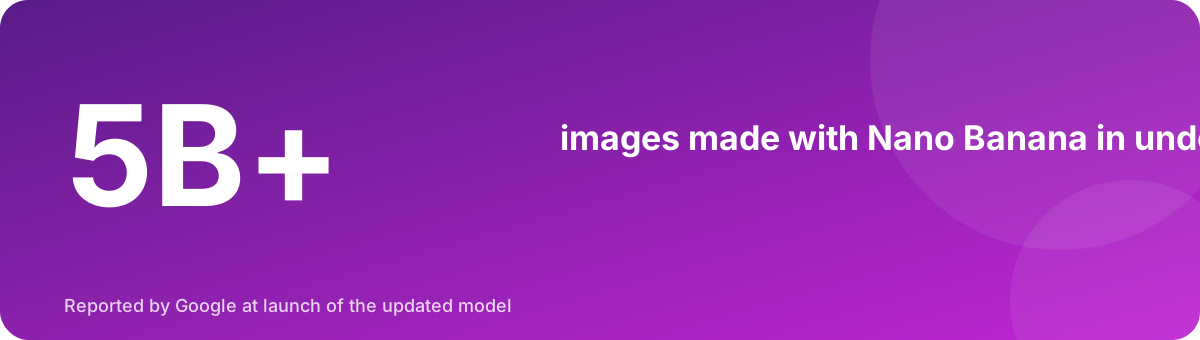
Google's updated image editing model in the Gemini app focused on keeping a person's or pet's likeness consistent across edits. You could change an outfit, blend photos or copy a style from one picture to another. More than 5 billion images were made with it in under a month, and Gemini reached number one on the App Store.
September 2025: the Sora 2 app
OpenAI launched an app that works like a TikTok of AI-generated video. TechCrunch reported it reached number one on Apple's US App Store while still invite-only, with around a million downloads in under five days.
What I want you to take away
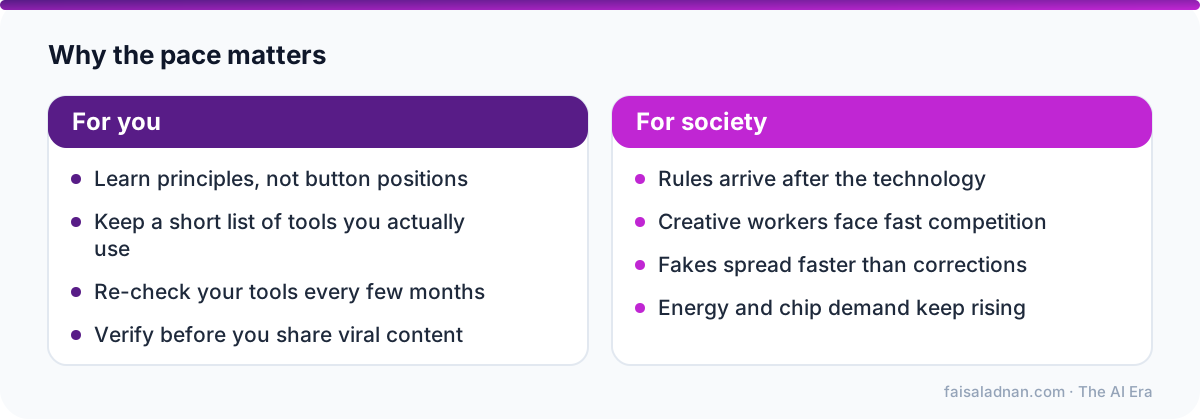
- The pace is the story. Skills and tools you learn today may be replaced within a year, so learn the principles and keep practising.
- Competition is global. A low-cost model from one lab can shake an entire market in one day.
- Every viral moment has a cost: compute, copyright questions or deepfakes. Notice who pays.
A practical way to keep up without burning out
You cannot read every announcement, and you do not need to. Pick one source you trust, check it once a week, and ask three questions about anything new: what can it do that I could not do last month, who has verified that claim, and what would it cost me to try it? That routine takes twenty minutes and keeps you informed without turning you into a full-time news reader.
The story continued in 2026, when the headlines moved from creating media to finding bugs, running software and doing research.
Keep reading
- Then Machines Started to Create: GPT-3, ChatGPT, GPT-4 and the Pope in a Puffer Jacket
- AI in 2026 So Far: Models That Find Bugs, Run Software and Do Research
- Type a World, Walk Into It: Genie 3 and What AI Means for Game Development
See the complete AI Era series

Written by Faisal Adnan
Business Intelligence and AI mentor. I teach Data Analytics, Power BI, Microsoft Fabric, SQL, Python and applied AI, and write about what is changing and what it means for your career.