Is AI a Bubble? Both Sides Have a Point
Faisal Adnan · 05 Nov 2026
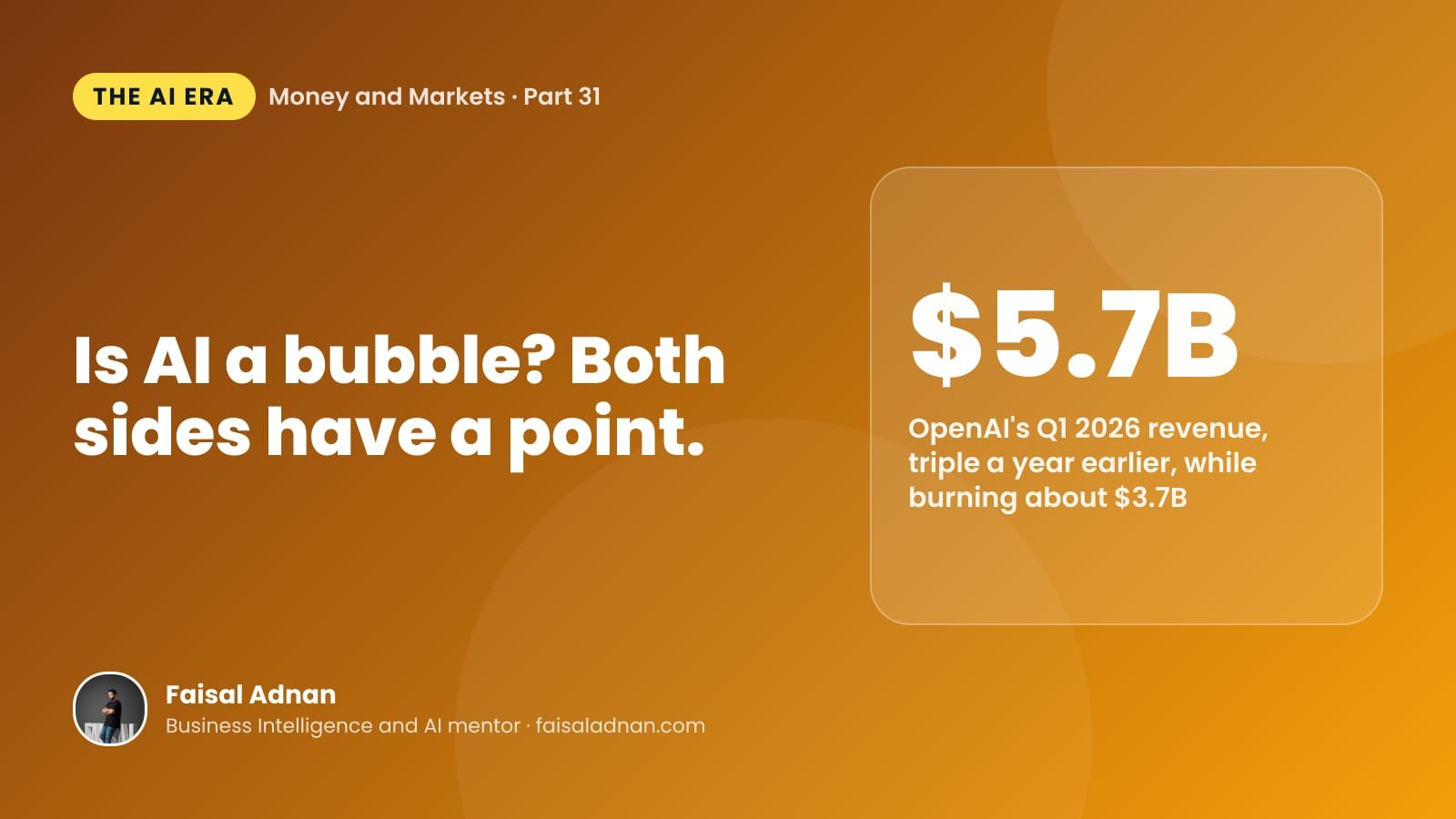
Whenever a technology becomes this expensive and this popular, the same question appears: is it a bubble? I do not think a confident yes or no is honest. Both camps have real evidence. This post sets out each side as fairly as I can, then looks at what history says and how to plan your career around the uncertainty. It is not investment advice.
Key takeaways
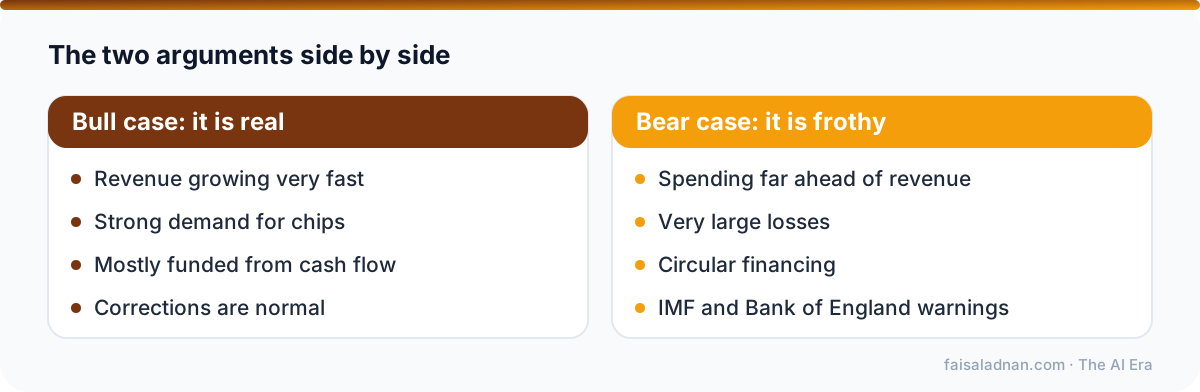
- Bull case: very fast revenue growth, strong chip demand and Big Tech paying mostly from cash flow, not debt.
- Bear case: spending of about $800 billion a year is far ahead of revenue, losses are huge and financing is circular.
- In 2000 the dot-com bubble burst and the internet still won. Tie your career to transferable skills, not to one company.
The bull case: it is real
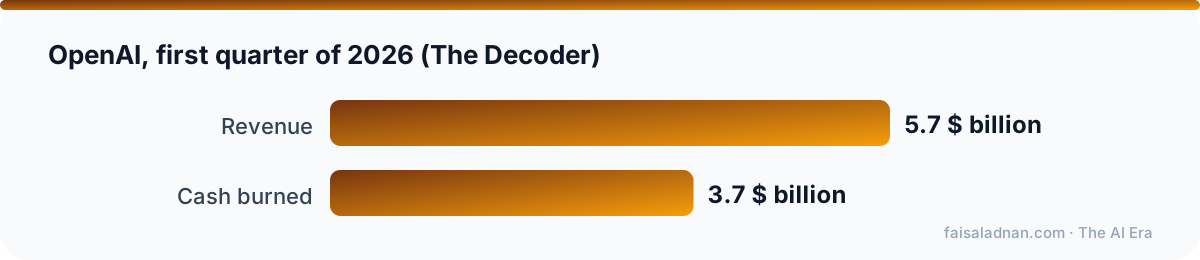
- Revenue is growing very fast. Anthropic's revenue grew about 14 times in a year and OpenAI's about 3 times. Anthropic's IPO filing on 26 October 2026, reported by Beinsure, disclosed fast growth. The Decoder reported that in the first quarter of 2026 OpenAI took in $5.7 billion in revenue, triple the year before.
- Chip demand is strong. AMD's data-center sales were reported up 97% on 3 November 2026. (I could not open that page while writing, so check the original market report.)
- Big Tech mostly pays from cash flow, not from dot-com-style debt.
- A 10% correction is normal in markets and does not make a crash.
The bear case: it is frothy
- Spending is far ahead of revenue. About $800 billion a year is going into infrastructure.
- The losses are huge. The same Decoder report says OpenAI burned about $3.7 billion in that first quarter, and Anthropic's filing also reported a large net loss.
- Circular financing inflates demand, as I explained in the post on the spending boom.
- Warnings from the top. Fortune wrote about Sam Altman's paradox: warning of a bubble while raising trillions, with Altman saying investors are overexcited. The IMF and the Bank of England have both warned of a significant market correction if enthusiasm for AI cools.
What history says
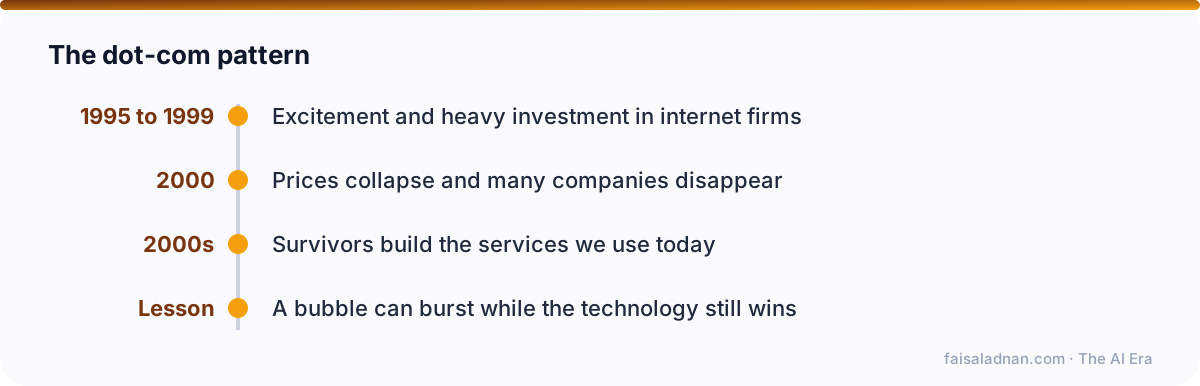
In 2000 the dot-com bubble burst, and the internet still won. Many companies disappeared, and the survivors became the biggest on earth. Whatever happens to share prices, the shift in skills is not going to reverse. A company that learned to run reports with AI will not forget how.
How I plan around it
- Do not tie your career to the fortune of one company. Tie it to skills that transfer: data, evaluation, security, integration.
- If the money tightens, businesses will care more about practical use cases and proven savings. That favours people who can show results.
- Keep your investments and your learning separate. One is about prices, the other about capability.
- Prepare for both futures. If the boom continues, you will want AI skills. If it cools, you will want skills that save money, and AI skills can do that too.
Whether or not shares fall, the question for you is the same: what can you do with these tools that others cannot? Leaders disagree on when the biggest changes will arrive, and the next two posts show how much: what the accelerationists said and why Karpathy calls it a decade of agents.
Keep reading
- Hundreds of Billions In: The Numbers Behind the AI Spending Boom
- "It's the Decade of Agents, Not the Year": The Realists and Skeptics of AI
- World-Class AI Education for Rs. 0: A Free Four-Step Learning Roadmap
See the complete AI Era series

Written by Faisal Adnan
Business Intelligence and AI mentor. I teach Data Analytics, Power BI, Microsoft Fabric, SQL, Python and applied AI, and write about what is changing and what it means for your career.