Type a World, Walk Into It: Genie 3 and What AI Means for Game Development
Faisal Adnan · 05 Nov 2026
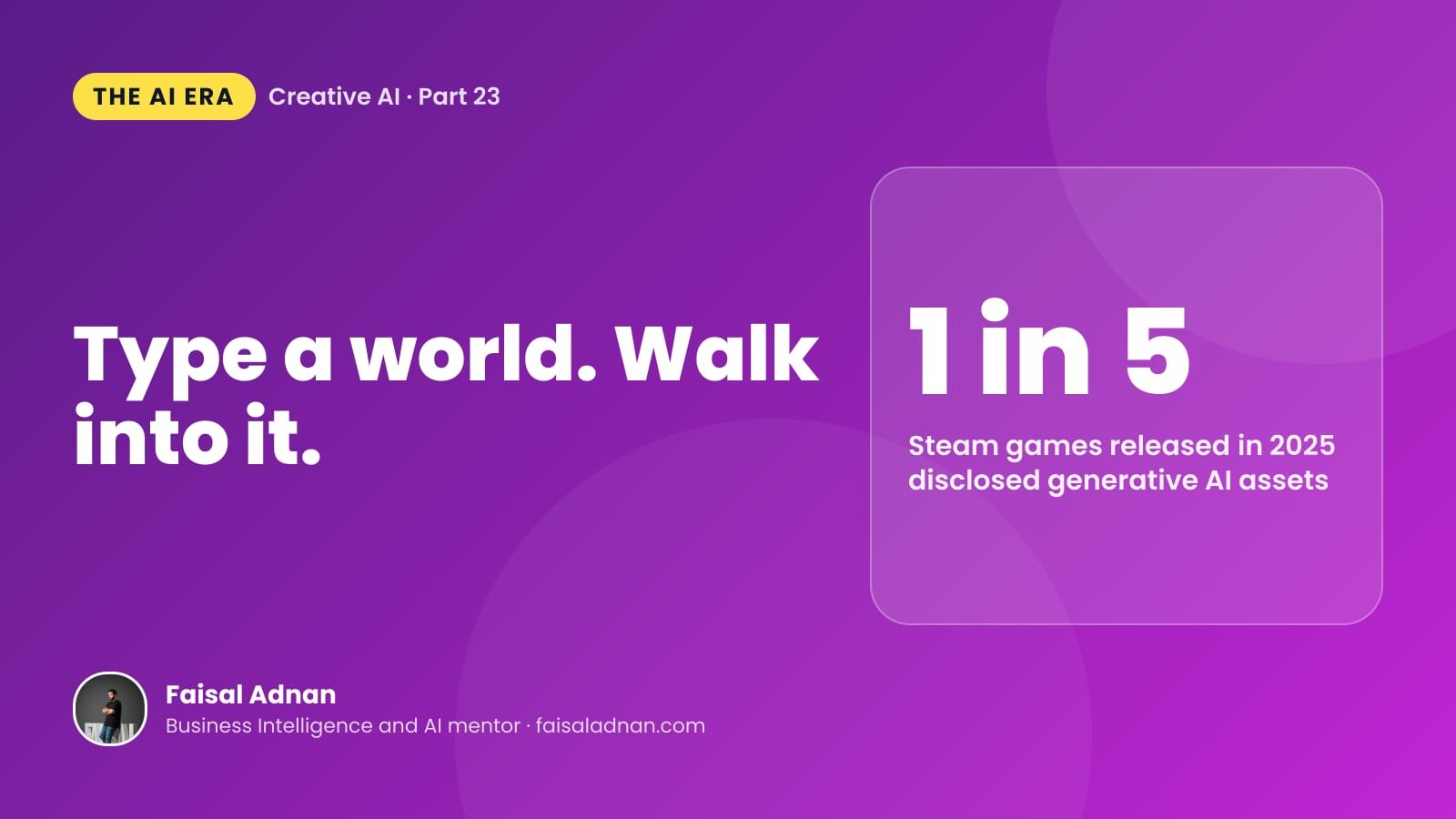
Imagine typing a few words and then walking around inside the world you described. That is the promise of a new kind of AI called a world model, and it has startled the games industry. At the same time, game developers have strong views about AI in their craft. This post looks at both.
Key takeaways
- Genie 3 generates explorable worlds at 720p and 24 frames per second and keeps them consistent for several minutes.
- 7,818 Steam games (about one in five released in 2025) disclosed generative AI assets, and the GDC 2026 survey found 52% of developers say it harms the industry, up from 18%.
- Prototyping gets much faster, but game design, writing, art direction and sound still decide whether a game is good.
Genie 3: playable worlds from text
Google DeepMind's Genie 3 is a world model that generates explorable environments in real time, at 720p and 24 frames per second, and keeps them consistent for several minutes. Android Central described it as dropping you into a 3D world you can explore as it happens.

When "Project Genie" launched publicly in the US in January 2026, PocketGamer.biz reported that shares of Take-Two, Roblox and Unity fell. It lets users create 60-second virtual worlds. An industry voice quoted there questioned the real use case, so I would call the market reaction a nervous one more than a verdict. A minute of wandering is not a shipped game with levels, goals and balance.
Arc Raiders: AI voices and a backlash
Arc Raiders sold around 12.4 million copies even though it used AI text-to-speech for some voice lines. Players pushed back, and the studio re-recorded lines with actors. Embark Studios' CEO Patrick Söderlund told PCGamesN that "a real professional actor is better than AI", and acknowledged a quality difference between real performances and AI speech.
The lesson: a game can sell millions and still lose goodwill over how it was made. Players noticed, and the studio responded.
How common is generative AI in games?
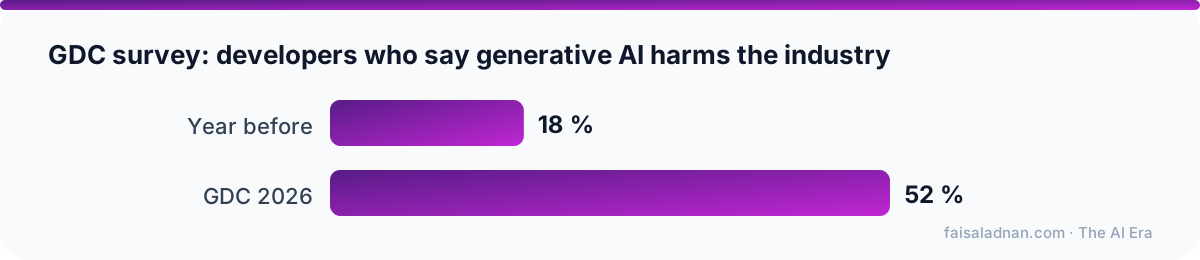
Tom's Hardware reported that 7,818 games on Steam, about one in five of those released in 2025, disclosed the use of generative AI assets, up around 700% year on year. The GDC 2026 State of the Industry survey adds a clear picture of developer opinion: 36% use generative AI at work, and 52% say it harms the industry, up from 18% the year before.
How I read it
- Developers use AI as a tool but do not trust it with the creative core. Many are happy to use it for placeholders and prototypes, and unhappy to see it replace writers or actors.
- Players care about craft. Disclosure and quality matter more than slogans.
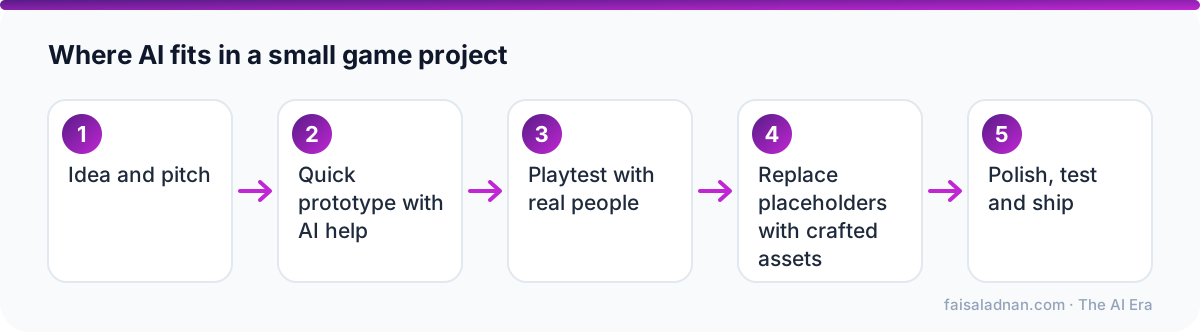
- Prototyping gets much faster. Strong game design, writing, art direction and sound still decide whether a game is good.
For learners in Pakistan
Game development is a growing field here. A practical plan:
- Learn Unity or Unreal. The engines matter more than any single AI tool.
- Ship a small game, even a tiny one, and put it online. Finishing is a skill most beginners skip.
- Treat AI as a way to prototype faster, not as a replacement for portfolio work you can explain.
- Be honest about what AI made. Studios and players increasingly expect disclosure.
If you want to try the creative tools yourself without paying, see the free toolkit for images, video, voice and no-code apps.
Keep reading
- Hollywood's Love-Hate Year: Veo, the End of Sora, Kling and the Lawsuits
- "We're Now Programming Computers in English": How Much Code Does AI Write?
- Free AI Toolkit (2/3): Images, Video, Voice and No-Code Apps With No Paid Subscription
See the complete AI Era series

Written by Faisal Adnan
Business Intelligence and AI mentor. I teach Data Analytics, Power BI, Microsoft Fabric, SQL, Python and applied AI, and write about what is changing and what it means for your career.