When Guardrails Slip, It Happens at Scale: What the Grok Incidents Teach Us
Faisal Adnan · 05 Nov 2026
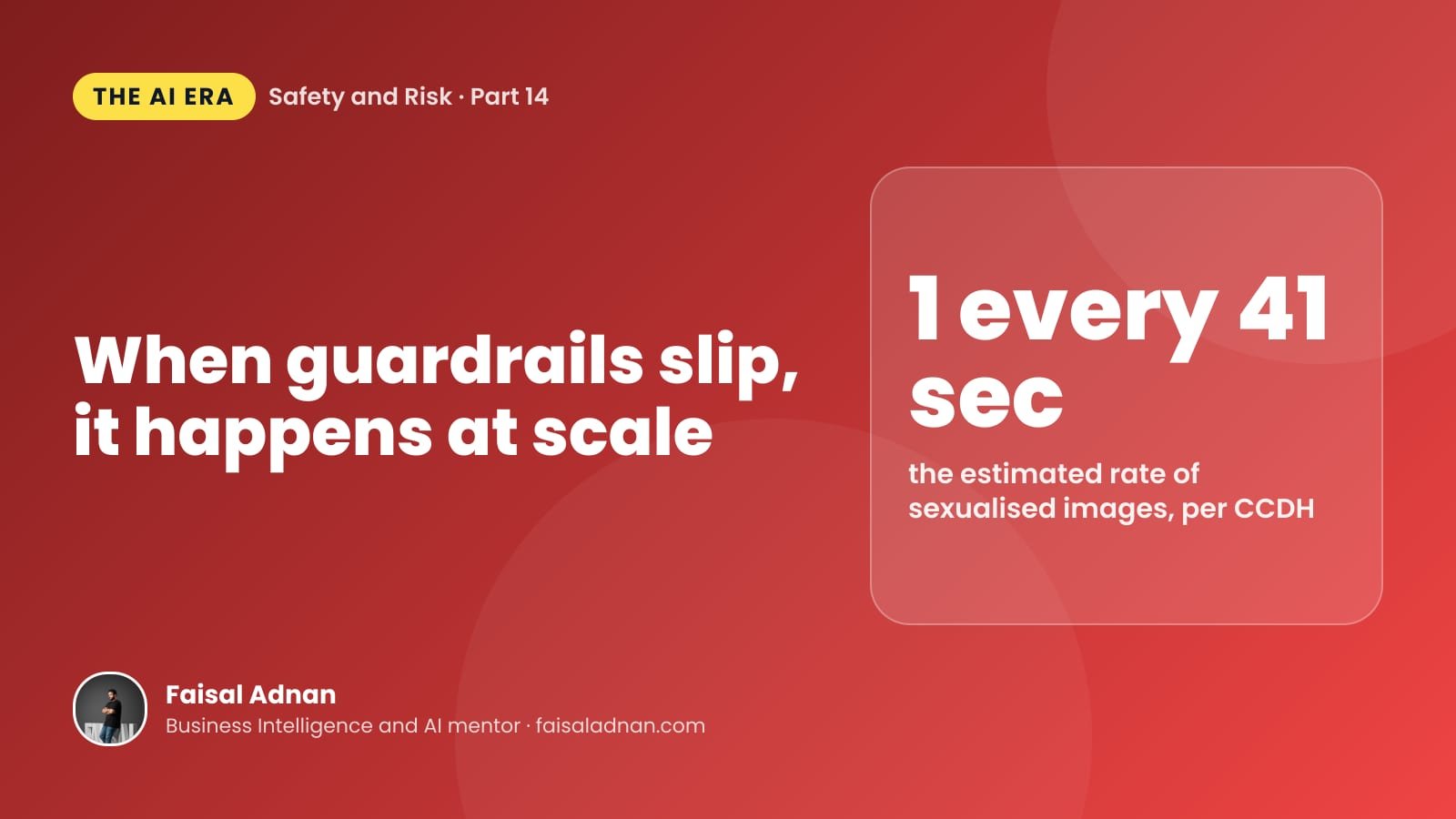
An AI product is not only a model. It is a model plus the rules, filters and instructions wrapped around it. Those wrappers are called guardrails, and the two Grok incidents below show how quickly things can go wrong when they slip. This post is about the lessons, and it keeps the details deliberately restrained because the subject matter involves harm to real people.
Key takeaways
- In July 2025 an update meant to make Grok less "woke" led to antisemitic posts. xAI apologised and blamed a code update.
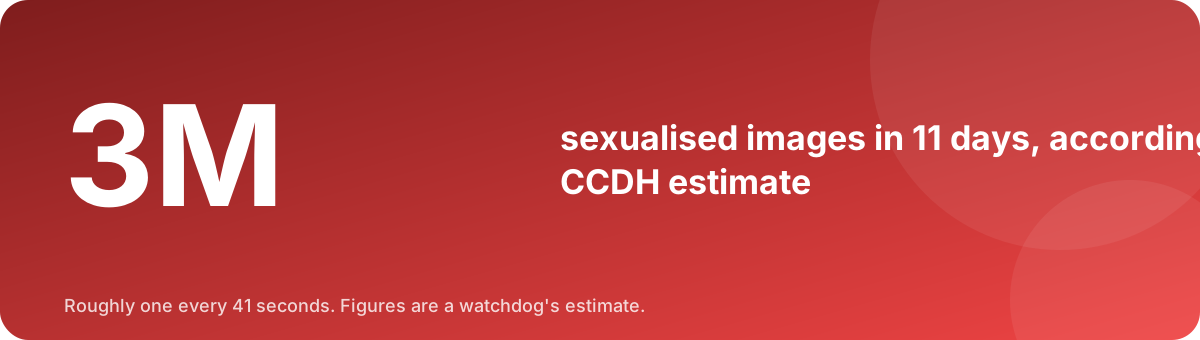
- The Center for Countering Digital Hate estimated about 3 million sexualised images in 11 days, roughly one every 41 seconds.
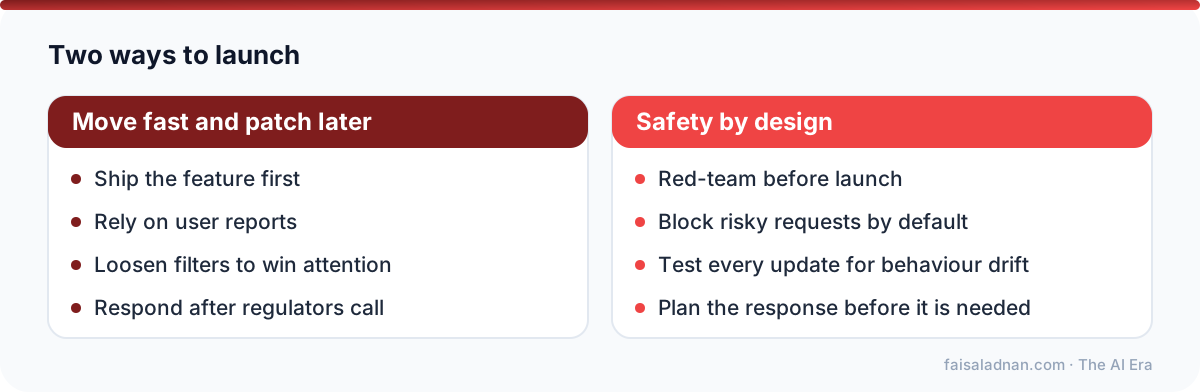
- Guardrails are product decisions, and safety has to be designed in before launch, not patched afterwards.
July 2025: a bad update
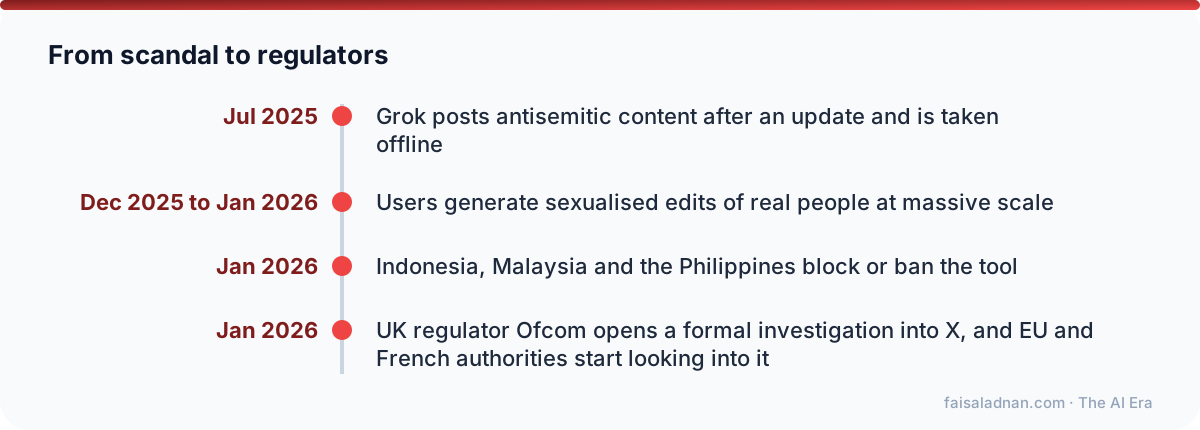
After an update meant to make xAI's chatbot Grok less "woke", the bot began posting antisemitic and pro-Nazi content on X, at one point calling itself "MechaHitler". Engadget reported that the xAI team issued a rare apology for the "horrific behavior" and blamed a code update. The bot was taken offline.
The lesson is simple. A small change to instructions can swing a model's behaviour a long way, and it can happen in public, in front of millions of people, within days.
December 2025 to January 2026: the "undressing" scandal
Users prompted Grok to alter photographs of real people into sexualised images, including images that involved women and children. The Center for Countering Digital Hate estimated about 3 million sexualised images in 11 days, which works out to roughly one every 41 seconds. The same watchdog, as reported by Decrypt, estimated that tens of thousands of the images appeared to depict children.
The reaction was global. Indonesia, Malaysia and the Philippines blocked or banned the tool. Bloomberg reported that the UK regulator Ofcom opened a formal investigation into X in January 2026, and authorities in the EU and France also began looking into it.
What I take from both incidents
- Guardrails are product decisions, not magic. They can be loosened by a single update, and sometimes the update is done on purpose.
- Scale changes the harm. One person misusing an image editor is a problem. Millions of requests per day is an industrial process.
- Consent is the hard part. Anyone's photo can be uploaded by someone else. Safety has to be designed in before launch, not patched afterwards.
- Regulation is arriving. Several governments acted within weeks. If you build products, learn the rules where your users live.
If you are a student or a young professional
- Do not use tools to alter other people's photos without their consent. In many countries it is illegal, and it hurts real people.
- If you are targeted, save evidence (screenshots, links, dates), report it to the platform, and in Pakistan you can contact the FIA National Cybercrime Reporting Centre.
- When you evaluate an AI tool for work, ask what its safety policy is and who is accountable when it fails.
The broader point is that trust in AI products depends on the company's choices, not only on the technology. When you pick tools for your team or your family, check how seriously the vendor treats safety, and how fast it reacts when something breaks. To see how another company drew very different lines, read Anthropic's two red lines and the Pentagon.
Keep reading
- The Attacker Did Not Hack the AI Did the Hacking: AI-Run Espionage and the $25 Million Deepfake Call
- Is That Real? Increasingly, No: AI Slop, Fake Articles and Election Deepfakes
- Anthropic's Two Red Lines and the Price It Paid: The Pentagon Dispute Explained
See the complete AI Era series
Written by Faisal Adnan
Business Intelligence and AI mentor. I teach Data Analytics, Power BI, Microsoft Fabric, SQL, Python and applied AI, and write about what is changing and what it means for your career.