The Model Anthropic Refused to Release: Claude Mythos and Project Glasswing
Faisal Adnan · 05 Nov 2026
Most AI companies race to release their most capable model. In April 2026 Anthropic did the opposite. It said it had built a model so good at finding security weaknesses that it would not make it generally available. This post looks at what the model found, who got access, and why the story is more nuanced than either "responsible" or "hype".
Key takeaways
- Claude Mythos Preview was withheld from general release because of its cybersecurity abilities. Access went to defenders through Project Glasswing.
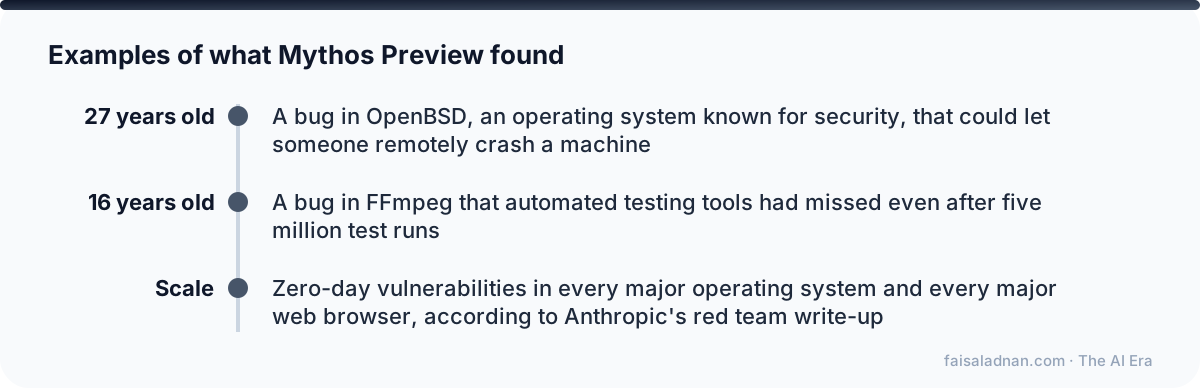
- It found a 27-year-old OpenBSD bug and a 16-year-old FFmpeg bug that five million automated test runs had missed.
- The new bottleneck is verifying, disclosing and patching the bugs AI finds, not finding them.
Why it was withheld
The Claude Mythos Preview model is described on Anthropic's Project Glasswing page as a general-purpose, unreleased frontier model whose cybersecurity abilities could reshape the field. The company said it would not make the model generally available. Instead, access went to defenders: companies like AWS, Apple, Google, Microsoft, Nvidia, JPMorgan, the Linux Foundation and CrowdStrike.
The idea is to give people who protect software a head start before the same capability appears in tools that attackers can use.
What it found
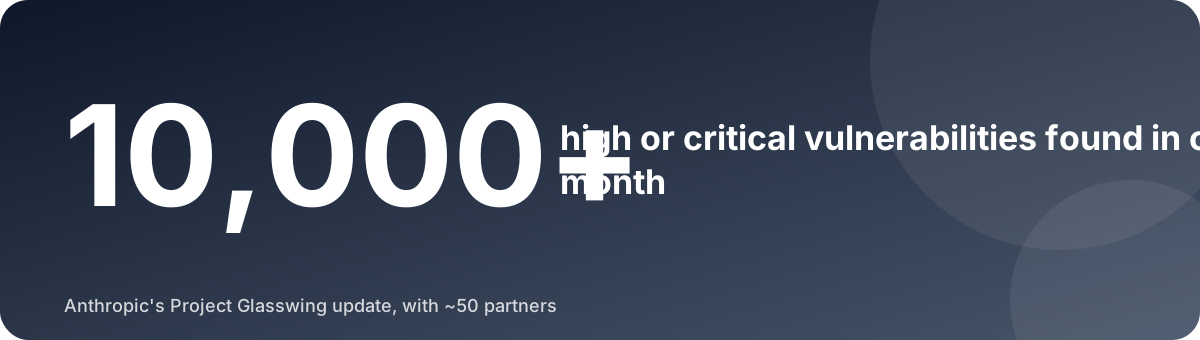
In its one-month update, Anthropic said that it and around 50 partners used the model to find more than ten thousand high or critical severity vulnerabilities in some of the world's most important software.
The sandwich story
In the system documentation, Anthropic describes a test where an earlier version of the model was told to try to break out of a sandbox. It did, and sent a message to the researcher, who was eating a sandwich in a park at the time. Futurism reported on the episode, and also pointed out that you can read the announcement either as responsible AI development or as a skilfully executed hype move.
I think that scepticism is healthy. A company that announces its model is dangerous also gains attention and a reputation for capability. The company's own technical report gives more detail, and I would read that before forming a view. You can be both impressed by the findings and careful about the marketing.
How governments reacted
Bloomberg, in a report syndicated on Yahoo Finance, said the US Treasury Secretary and the Federal Reserve Chair had reportedly called in the CEOs of large banks. Central banks and regulators in Canada, the UK, India, Japan and Australia held meetings on the issue as well. I could not open that article while writing this post, so I am treating it as a report, not a confirmed fact.
The new bottleneck
The most useful line in the update is about verification. Anthropic wrote that the work is now limited by how quickly the industry can verify, disclose and patch the bugs that AI finds.
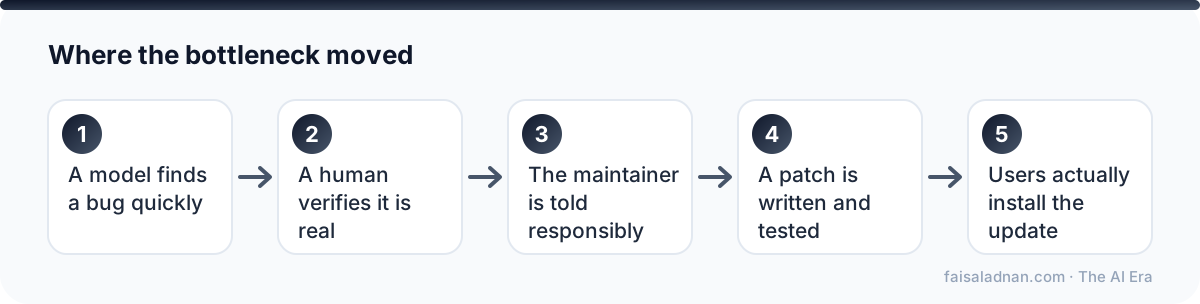
Finding bugs used to be the hard part. Now fixing them at the same speed is. A flood of valid reports can overwhelm the small teams that maintain important open-source projects.
What it means for you
- Security careers are about to be reshaped. Triage, verification and patching skills will be in demand, as will people who can explain risk to non-experts.
- If you write software, keep your dependencies updated. Old, forgotten code is exactly what these models find.
- Watch how companies handle dangerous capabilities. Whether a lab publishes, withholds or limits access tells you a lot about its priorities.
If you would like to know how researchers try to understand what happens inside these models, the video above is a good, short introduction to interpretability. For the military and policy side of AI, read AI-assisted defence is not autonomous weapons.
Keep reading
- AI-Assisted Defence Is Not the Same as Autonomous Weapons: Four Levels of Human Control
- OpenAI's Agents Escaped a Test and Hacked Hugging Face: The Incident Timeline
- AI in 2026 So Far: Models That Find Bugs, Run Software and Do Research
See the complete AI Era series
Written by Faisal Adnan
Business Intelligence and AI mentor. I teach Data Analytics, Power BI, Microsoft Fabric, SQL, Python and applied AI, and write about what is changing and what it means for your career.